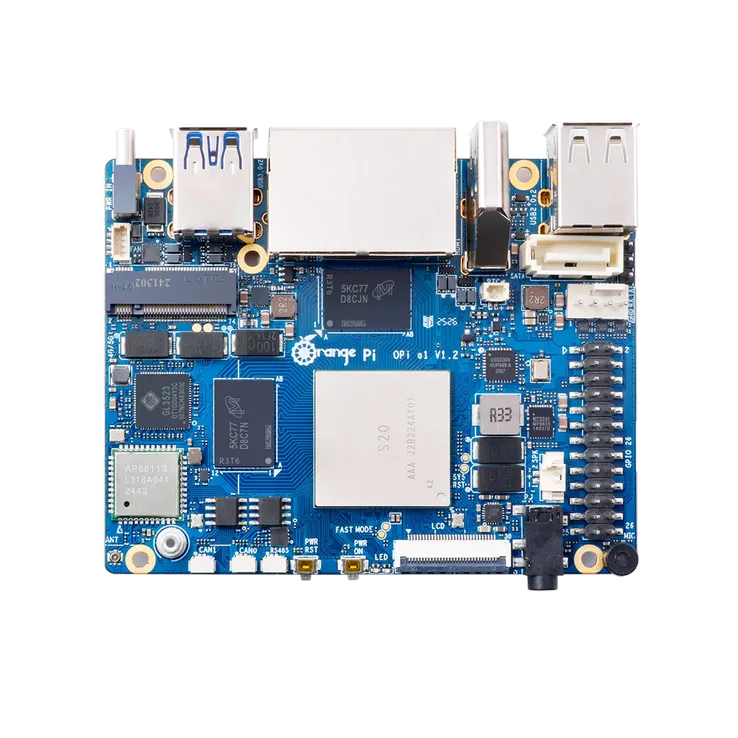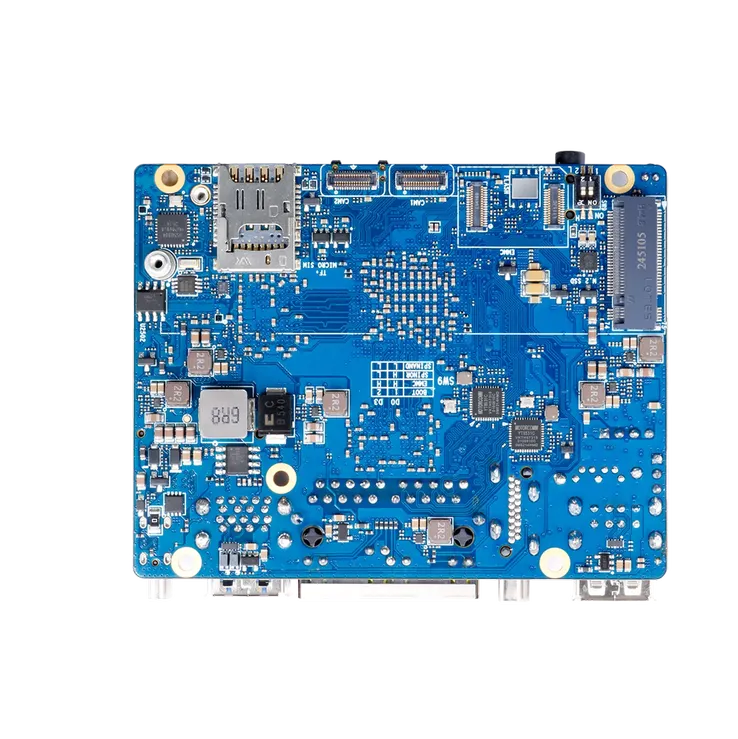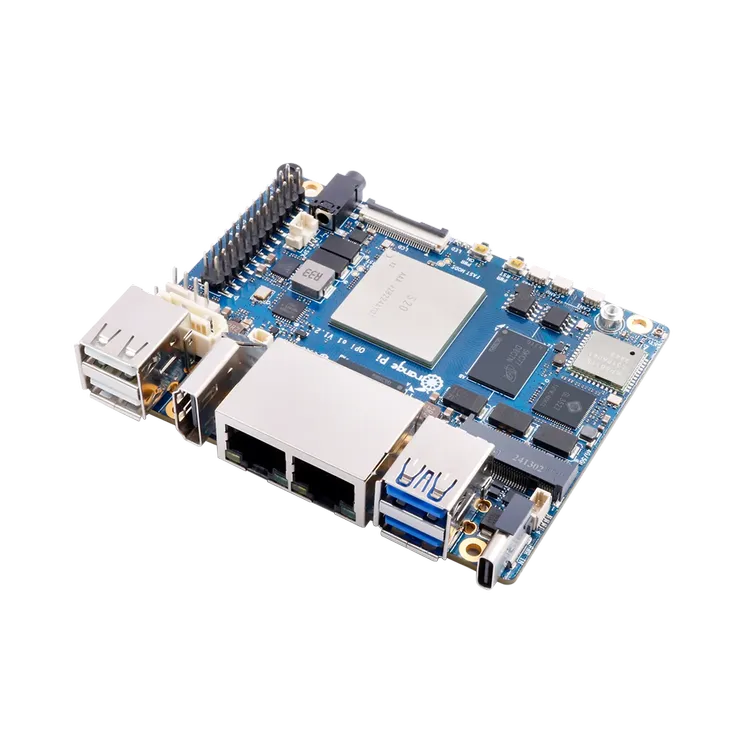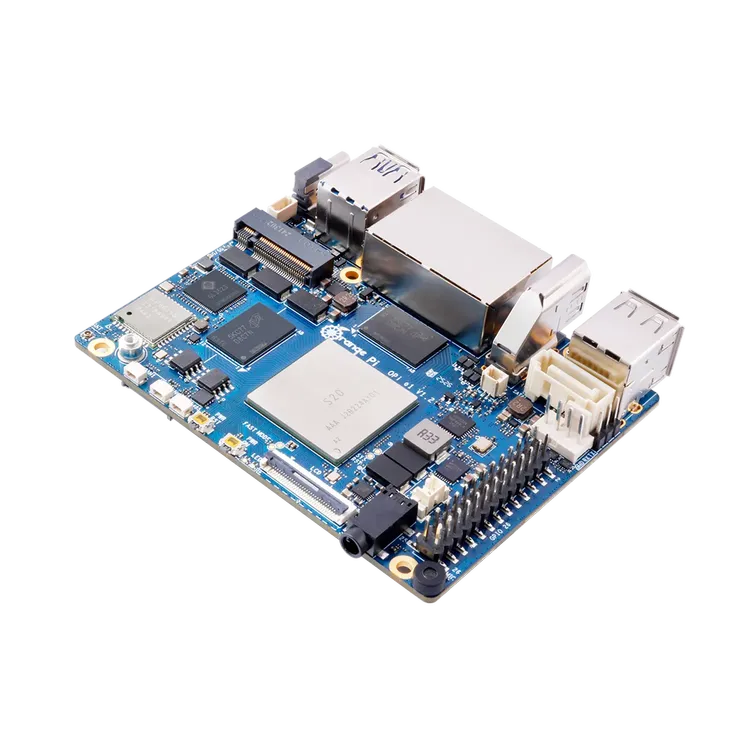


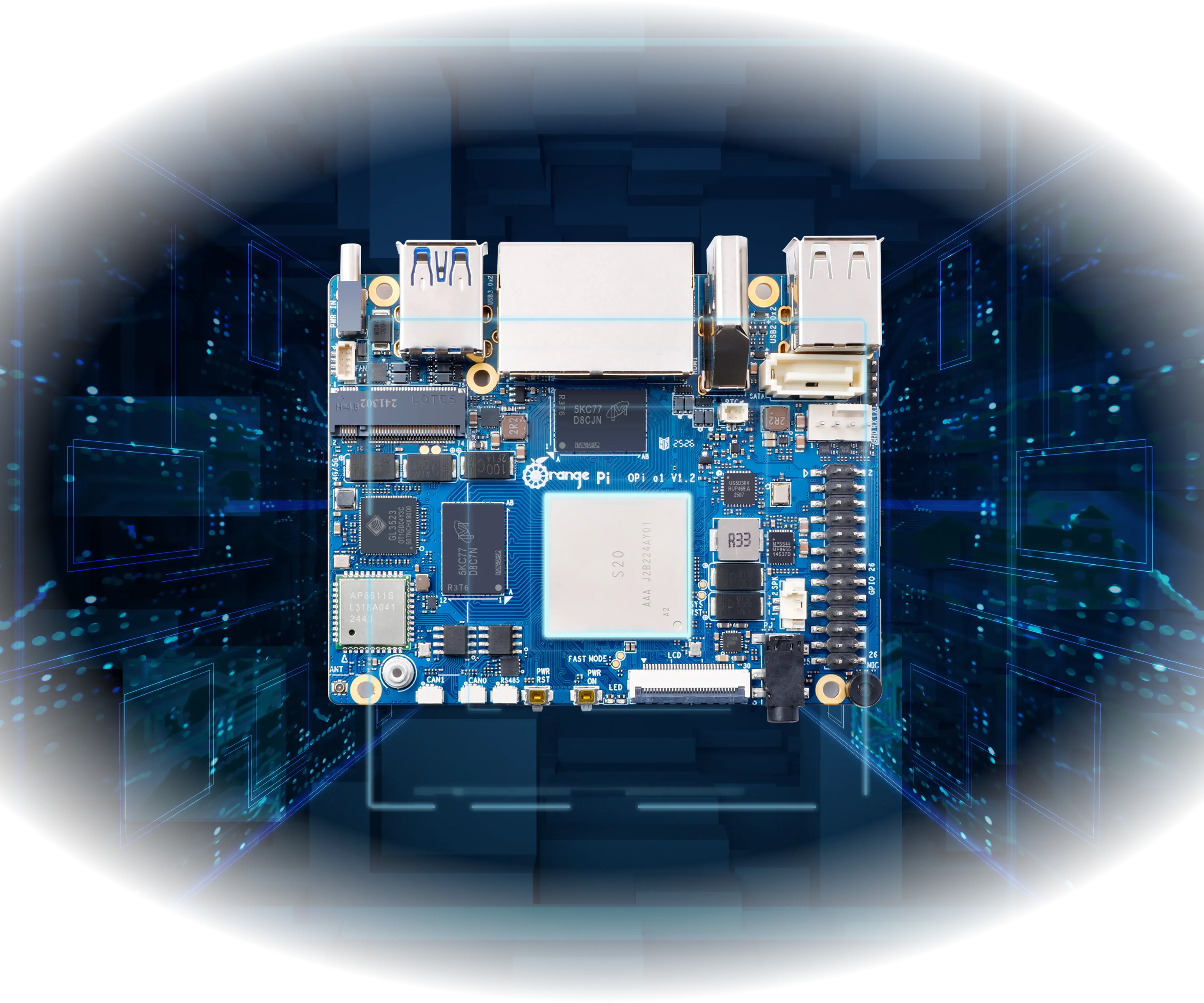








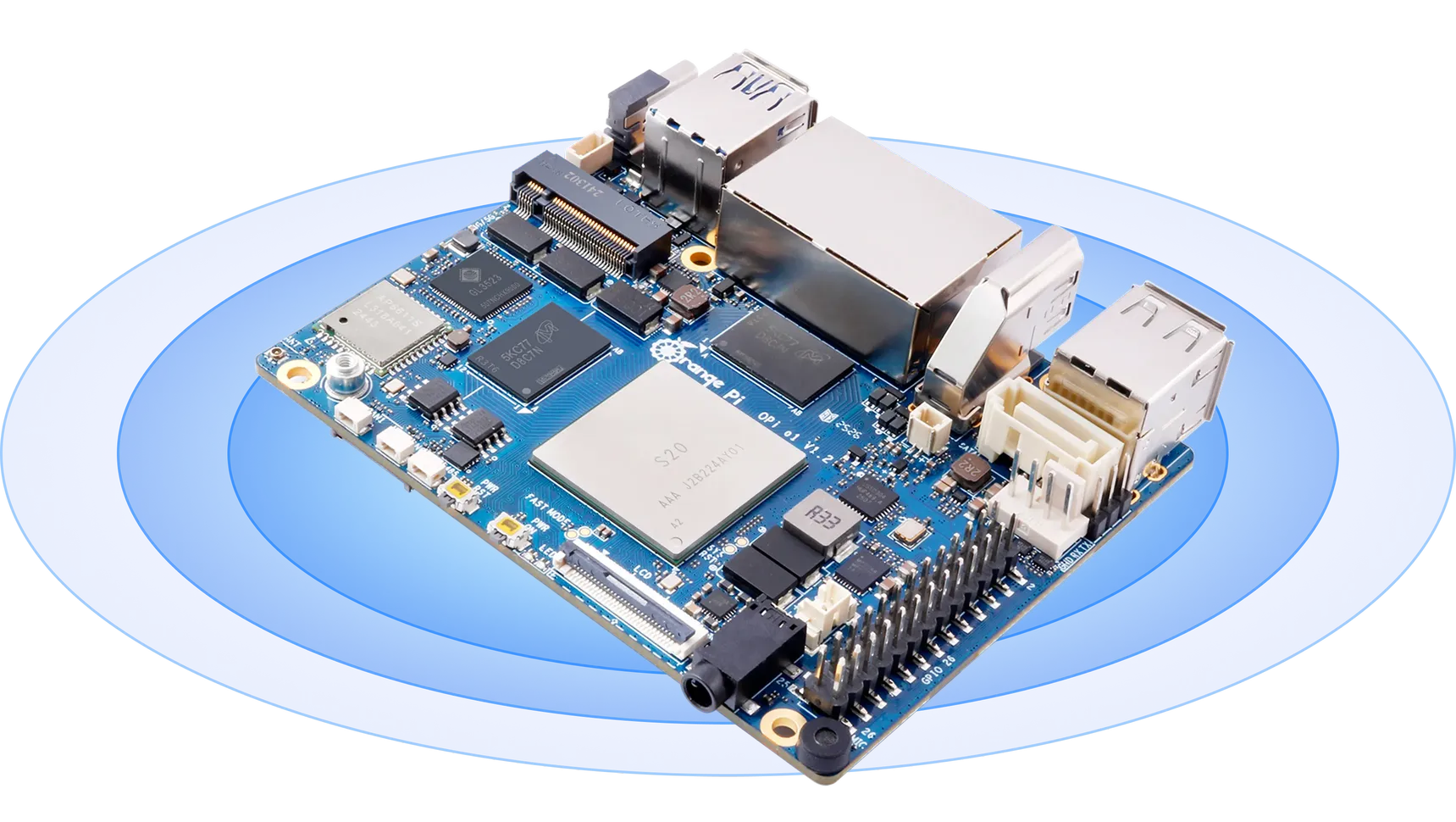
The OrangePi O1 is powered by the Sophgo BM1688 SoC. It features an 8-core ARM Cortex-A53 @ 1650Mhz, paired with a RISC-V C906 @ 1200Mhz. It integrates a SOPHGO Neural Network Acceleration Engine (TPU) with impressive performance of up to 16 TOPS@INT8. The board offers 8GB or 16GB LPDDR4/LPDDR4X memory and supports optional 16GB/32GB/64GB/128GB eMMC modules. It includes an onboard M.2 interface for NVMe SSDs, enabling high-speed read/write operations and large-capacity storage. It also supports 4G/5G and Wi-Fi 6E + BT 5.3 expansion, making it convenient for edge computing deployments. Additionally, it supports 16 channels of 1080P@30fps H.264/H.265 video decoding and 10 channels of 1080P@30fps encoding, meeting the demands of more complex and diverse application scenarios.
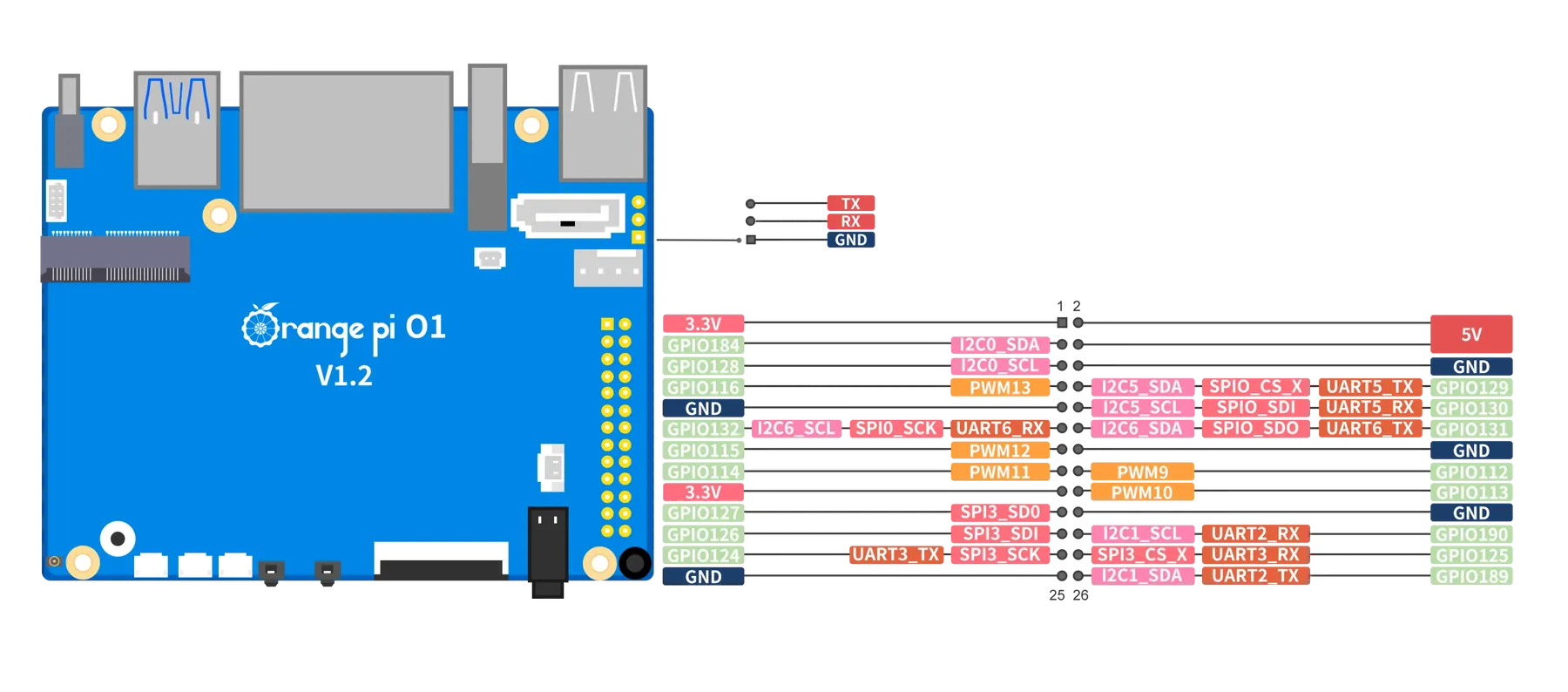
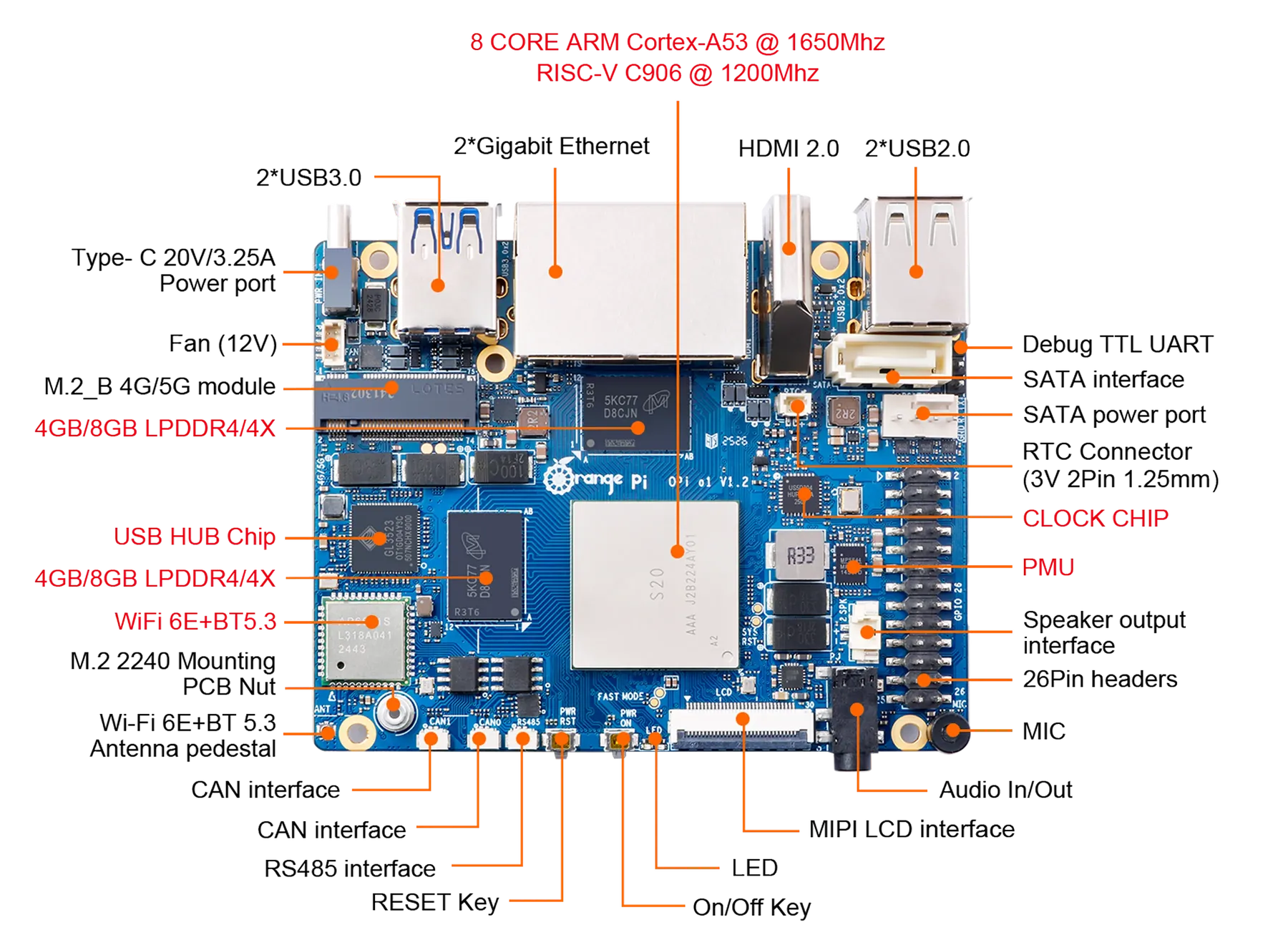
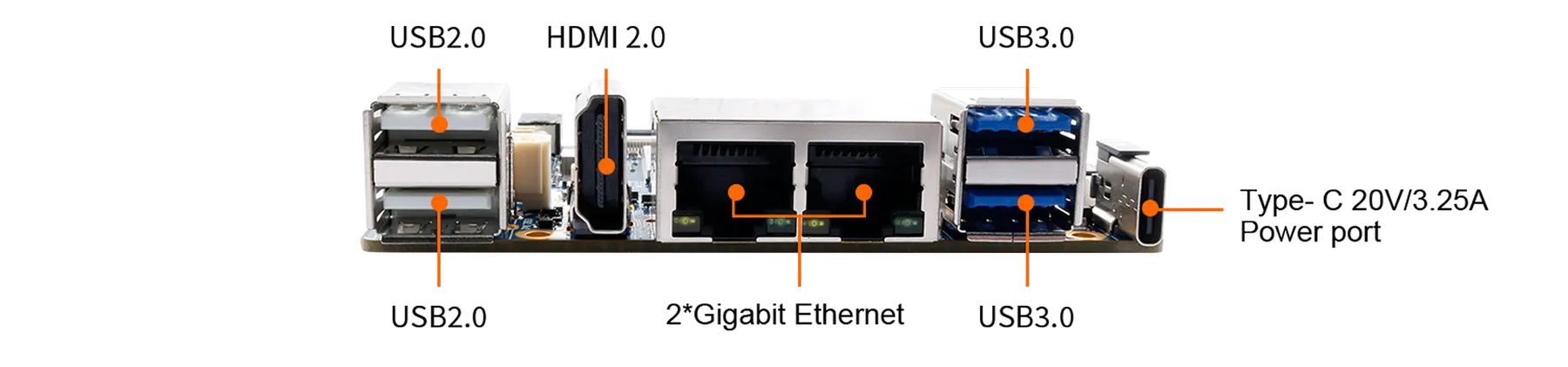
The OrangePi O1 offers a rich set of interfaces, including USB 3.0, USB 2.0, HDMI, Gigabit Ethernet, MIPI camera interfaces, TF card slot, Type-C power input, 26-pin expansion header, and fan connector. These interfaces greatly expand connectivity options and meet users’ needs for connecting various peripherals.
With its high performance and low power consumption, the OrangePi O1 can efficiently run adapted AI models for applications such as image classification, object detection, instance segmentation, semantic segmentation, behavior analysis, OCR, natural language processing, speech recognition, speech synthesis, and recommendation systems. It is widely suitable for edge computing, smart transportation, smart campuses, intelligent industrial gateways, AIoT, in-vehicle platforms, and many other fields.


Supports 16 channels of 1080P H.264/H.265 video decoding and 10 channels of 1080P encoding, making it perfect for video surveillance, streaming media, and similar applications. It also features high-performance JPEG encoding/decoding capabilities.

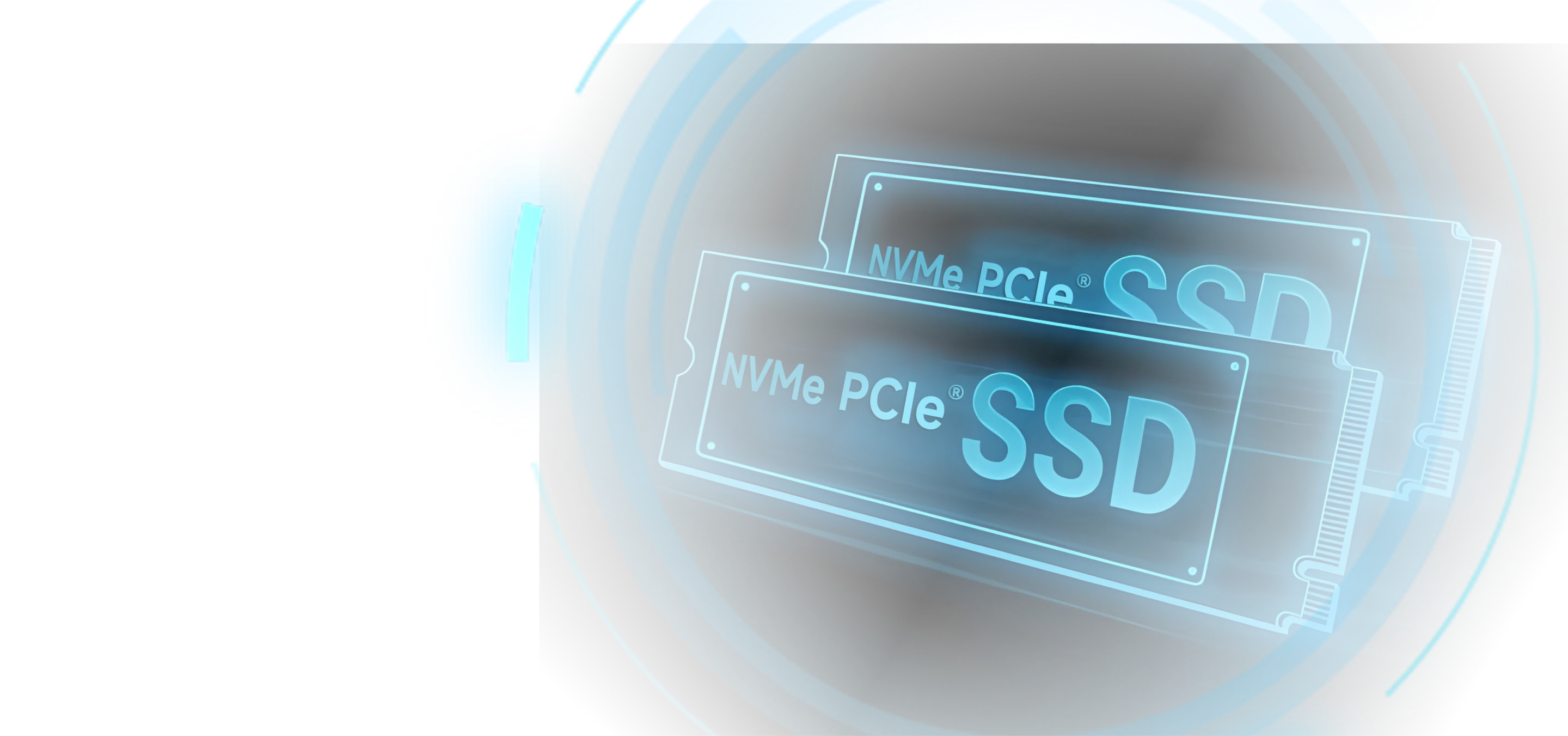
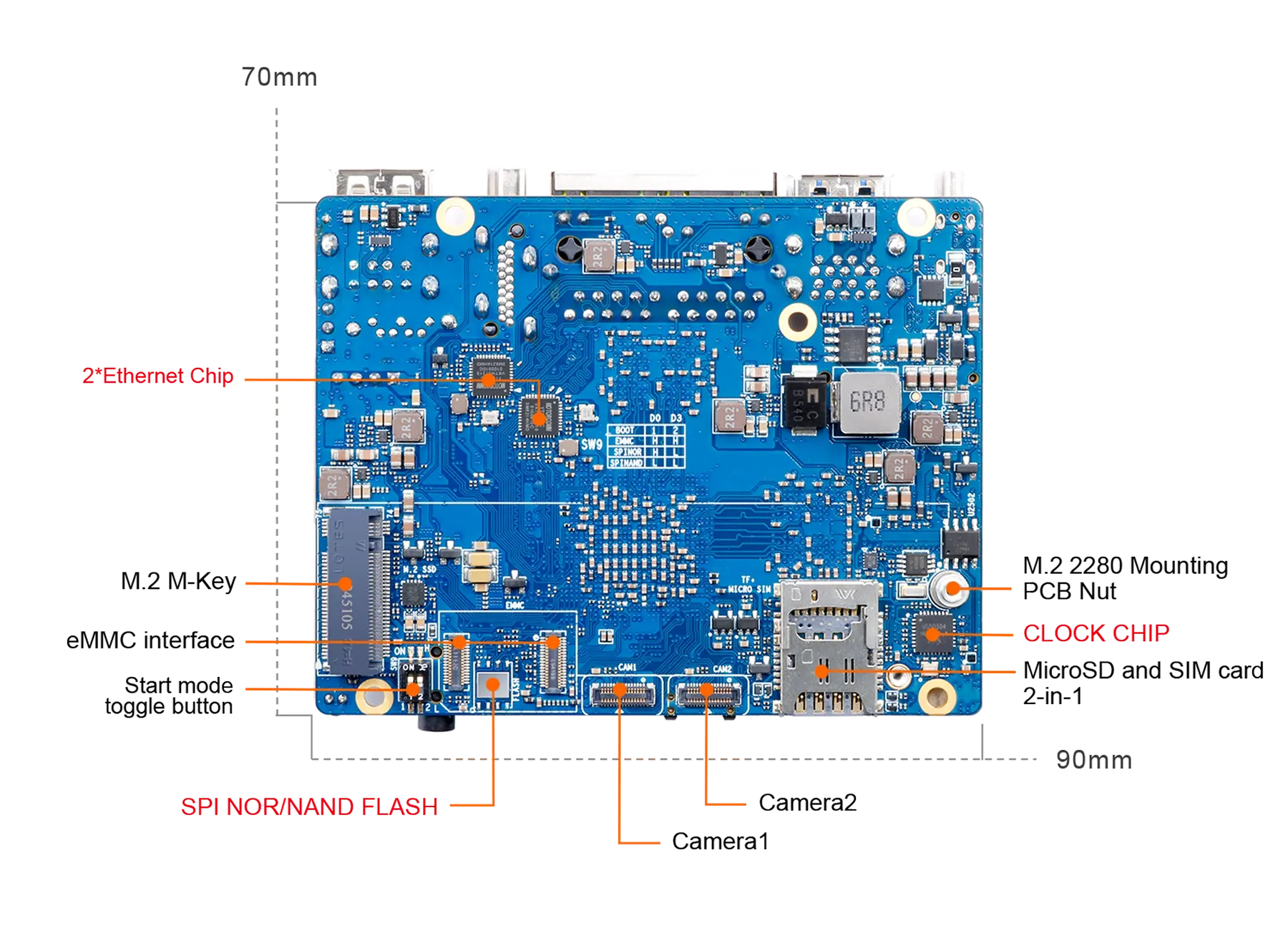
Multiple storage choices including eMMC, SPI FLASH, NVMe SSD, SATA SSD, and microSD card significantly enhance connectivity and expandability.

Supports privatization deployment of large Transformer-based models such as Gemma-2B, Qwen1.5-1.8B, Llama2-7B, ChatGLM3-6B, and similar LLMs.
| SoC | BM1688 |
| CPU | Main Processor: 8-core ARM Cortex-A53 @ 1.65 GHz Co-processor: RISC-V C906 @ 1.2 GHz |
| TPU | Built-in SOPHGO Neural Network Acceleration Engine (TPU), delivering 16 TOPS@INT8 |
| Video decoding | H.264 & H.265: 16 channels of 1080P @ 30fps |
| Video encoding | H.264 & H.265: 10 channels of 1080P @ 30fps |
| Image Processing (JPEG) | Decoding: 480 frames/sec @ 1080P Encoding: 480 frames/sec @ 1080P |
| Memory | LPDDR4/LPDDR4X :8GB/16GB (Optional) |
| Storage | eMMC module (optional):16GB/32GB/64GB/128GB (Optional) SPI FLASH: 128Mb、256Mb (Optional) (eMMC and SPI FLASH are mutually exclusive) M.2 M-KEY Slot: Supports PCIe 3.0 M.2 NVMe SSD SATA Slot: Supports SATA 3.0 SSD microSD Card Slot: Supports up to 128GB uSD card |
| WIFI+Bluetooth | Wi-Fi+Bluetooth Wi-Fi + Bluetooth combo module Wi-Fi 6E + BT 5.3, BLE |
| 4G/5G Module | M.2 B-KEY Socket |
| Ethernet | 2× 10/100/1000 Mbps Gigabit Ethernet (Onboard PHY chip: YT8531C) |
| Display | 1× HDMI TX 2.0 port, supports up to 4K@60Hz output 1× 4-lane MIPI DSI interface (via FPC connector) |
| Camera | 2× 4-lane MIPI CSI camera interfaces |
| USB | 2× USB 3.0 Host ports 2× USB 2.0 Host ports |
| Audio | 3.5mm headphone jack (audio input/output) 2-pin speaker output connector Electret microphone input |
| Buttons | 1× Power button, 1× Reset button |
| FAN | 4-pin DC 12V fan interface |
| RTC | 2-pin backup battery interface |
| 26PIN | 26-pin Expansion 26-pin functional expansion header supporting: GPIO, UART, I2C, SPI, PWM |
| Power | Type- C 20V/3.25A |
| PCB | 90 x 70 mm |
| Weight | 76g |